
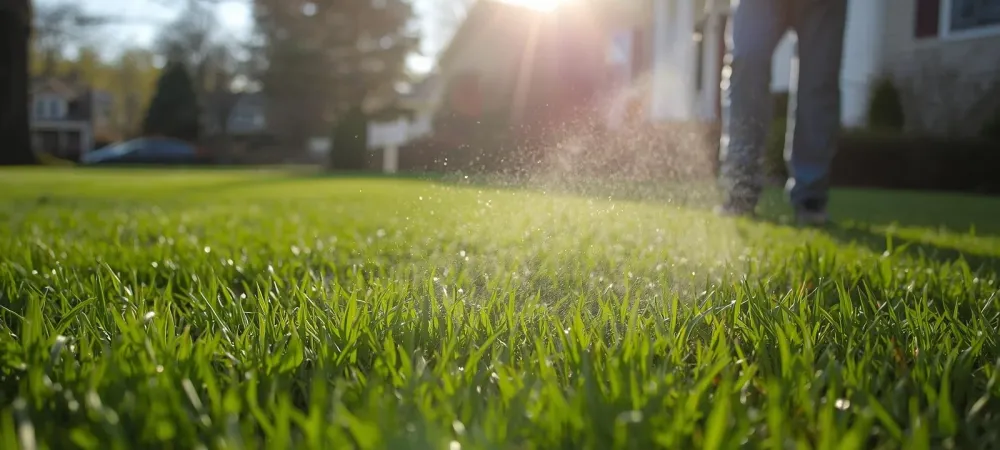
How to Time Crabgrass Pre-Emergent for Spring Weed Control in PA
That first warm day of spring feels like a reward after months of cold, until you notice crabgrass seedlings already poking through your turf. Every year, Pennsylvania homeowners miss the narrow window for pre-emergent applications and spend the rest of the season battling weeds they could have prevented.
Quick Answer: When Should You Apply Pre-Emergent in Pennsylvania?
Apply pre-emergent herbicides when soil temperatures reach 50-55°F and are rising, typically between mid-March and mid-April in southeastern Pennsylvania. Watch for forsythia blooms as a natural indicator; when those bright yellow flowers appear, crabgrass germination is imminent. Applications made 10-14 days before soil reaches 55°F provide the best protection.
Why Timing Makes or Breaks Your Weed Control
Crabgrass doesn't check the calendar; it responds to soil temperature. According to Penn State Extension, crabgrass seeds "begin to germinate when temperatures in the upper inch of soil reach approximately 55 to 58°F at daybreak for 4 to 5 days" (Landschoot, "Lawn and Turfgrass Weeds"). This means a warm spell in early April can trigger germination weeks earlier than expected, while a cold spring may delay it into May.
Pre-emergent herbicides work by creating a chemical barrier in the soil that prevents weed seeds from developing normally after germination. Once crabgrass seedlings emerge above ground, most pre-emergent products become ineffective. The Rutgers New Jersey Agricultural Experiment Station confirms that "most pre-emergent herbicides will not control crabgrass after it germinates" (Elmore and Tuck, "Crabgrass Control in Lawns").
In the Delaware Valley, where weather patterns can shift rapidly, understanding this temperature-driven process separates homeowners who enjoy weed-free lawns from those fighting crabgrass all summer.
How to Time Your Pre-Emergent Application Correctly
Getting pre-emergent timing right requires attention to local conditions rather than relying on generic calendar dates. Here's a practical approach that works for Pennsylvania lawns.
Step 1: Monitor Soil Temperature
Start checking soil temperature in early March using an inexpensive soil thermometer inserted 2 inches deep. Take readings at dawn when temperatures are lowest. You're looking for consistent readings approaching 50°F. When soil temperatures reach 50-55°F for several consecutive days, it's time to apply. In Bucks, Montgomery, Delaware, and Philadelphia counties, this typically occurs between March 15 and April 15, though annual variations of 2-3 weeks are common.
Step 2: Watch Natural Indicators
Forsythia shrubs serve as excellent phenological indicators. When these bushes display full yellow blooms, soil temperatures have reached levels suitable for crabgrass germination. Apply your pre-emergent as soon as forsythia reaches full bloom—or ideally, just before. Rutgers researchers note that "forsythia is an excellent phenological indicator for crabgrass germination" and recommend applying pre-emergent herbicides "as soon as possible" once blooms appear (Elmore and Tuck).
Step 3: Choose the Right Product
Several active ingredients provide effective crabgrass control. Prodiamine (Barricade) and dithiopyr (Dimension) offer longer residual activity and are favored by professional lawn care programs because a single well-timed application often provides season-long control. Pendimethalin (found in many retail products like Halts) requires more precise timing and may need a second application in areas with severe weed pressure or sandy soils.
If you're overseeding your lawn this spring, note that most pre-emergent herbicides will prevent grass seed from germinating, too. Products containing mesotrione or siduron are exceptions that can be used at or near seeding time, though they provide shorter residual control.
Step 4: Apply and Activate Properly
Uniform coverage is essential. Using too little product or applying unevenly will leave gaps in protection. Follow label rates carefully; a bag designed for 5,000 square feet won't provide adequate control if spread over 7,500 square feet.
Water the product into the soil within 2-7 days after application. About half an inch of irrigation or rainfall moves the herbicide into the zone where weed seeds germinate. Without this activation step, the product remains on grass blades rather than reaching the soil where it's needed.
Comparing Pre-Emergent Methods and Products
Not all pre-emergent approaches work equally well for every situation. The right choice depends on your lawn's weed history, soil type, and whether you plan to overseed.
- Granular products with fertilizer offer convenience—you address spring feeding and weed prevention in one application. However, the fertilizer timing may not align perfectly with pre-emergent timing, and application rates are locked to the fertilizer-to-herbicide ratio the manufacturer chose. These work well for lawns with moderate weed pressure and homeowners who prefer simplicity.
- Standalone granular pre-emergents provide more flexibility. You can apply at the precise rate needed for your weed pressure without being tied to a fertilization schedule. This approach works better for lawns with a heavy crabgrass history that may need higher rates or split applications.
- Liquid pre-emergents (applied by professionals) offer the most precise coverage and can be tank-mixed with other treatments. Professional applications typically use commercial-grade products with longer residual activity, reducing the chance of late-season breakthrough.
In southeastern Pennsylvania, where soils are clay-heavy, products with longer residual activity perform better than those with shorter residual activity. Sandy soils near the Delaware River may benefit from split applications: apply half the annual rate in early spring and the remainder 6-8 weeks later, since herbicides break down faster in sandier soils.
Prevention Tips for Long-Term Weed Suppression
Pre-emergent herbicides work best as part of a comprehensive lawn care strategy. Dense, healthy turf naturally crowds out weeds by blocking the sunlight and moisture that weed seedlings need to survive.
- Mow at 3 inches or higher: Research consistently shows that higher mowing heights reduce crabgrass infestations significantly compared to short-cut lawns. Taller grass shades the soil and prevents weed seeds from receiving the light they need to germinate.
- Fertilize in fall and early spring: Applying nitrogen during cooler months favors cool-season grasses over warm-season weeds like crabgrass. Avoid heavy nitrogen applications in summer, when crabgrass is actively growing.
- Water deeply but infrequently: Light, frequent watering keeps the soil surface moist—exactly what weed seeds prefer. Deep, occasional irrigation encourages grass roots to grow deeper while letting the surface dry out.
- Overseed thin areas in fall: Aeration and overseeding in September fills gaps left when summer weeds die, creating a denser turf canopy that resists weed invasion the following spring.
- Address soil compaction: Compacted soil favors weeds like goosegrass and weakens desirable turf. Annual core aeration improves root growth and helps your lawn outcompete weeds.
When to Call a Professional for Weed Control
While DIY pre-emergent applications can be effective, certain situations benefit from professional intervention.
- Severe weed history: If more than 30% of your lawn was crabgrass last summer, you may need a professional-grade program with multiple products and precise timing. Commercial herbicides often provide longer-lasting barriers than retail options.
- Mixed weed populations: Crabgrass, goosegrass, foxtail, and broadleaf weeds each have different germination timing and herbicide sensitivities. A professional weed control program can address multiple weed types with targeted treatments throughout the season.
- Uncertain timing: Missing the pre-emergent window by even a week or two can mean fighting crabgrass all summer with less effective post-emergent treatments. Professional applicators monitor soil temperatures across their service area and time applications based on actual conditions rather than calendar dates.
- New lawn establishment: If you're renovating your lawn this spring and need to overseed while controlling weeds, timing becomes especially critical. Professionals can sequence applications to maximize both grass establishment and weed control.
At Greenskeeper, our lawn care programs include properly timed pre-emergent applications as part of comprehensive seasonal treatments. We've been helping Delaware Valley homeowners maintain healthier lawns since 1982, and our technicians understand the specific weed pressures and soil conditions in Bucks, Montgomery, Philadelphia, and Delaware counties.
Get Ahead of Crabgrass This Spring
The window for effective pre-emergent application in southeastern Pennsylvania typically spans just 3-4 weeks. Once soil temperatures consistently exceed 55°F and crabgrass begins germinating, prevention becomes much more difficult. If you're already seeing questions about whether to tackle this yourself or hire professional help, now is the time to decide.
For homeowners in Bucks County, Montgomery County, Philadelphia, and Delaware County who want the confidence that their pre-emergent is applied at exactly the right time with the right products, request a free lawn care quote from Greenskeeper. Our 6-treatment programs include crabgrass prevention, fertilization, and weed control tailored to your lawn's specific needs—with no contracts and free re-treatments if you're not satisfied.
Call us at 215-938-8440 or get your free quote online to get started before the spring weed window closes.
Sources
- Elmore, Matthew, and Daniel P. Tuck. "Crabgrass Control in Lawns for Homeowners in the Northern US." Rutgers New Jersey Agricultural Experiment Station, FS1308, Aug. 2019.
- Landschoot, Peter. "Lawn and Turfgrass Weeds: Smooth Crabgrass and Large Crabgrass." Penn State Extension.
- Landschoot, Peter. "Control of Summer Annual Grass Weeds in Turfgrasses." Penn State Extension.